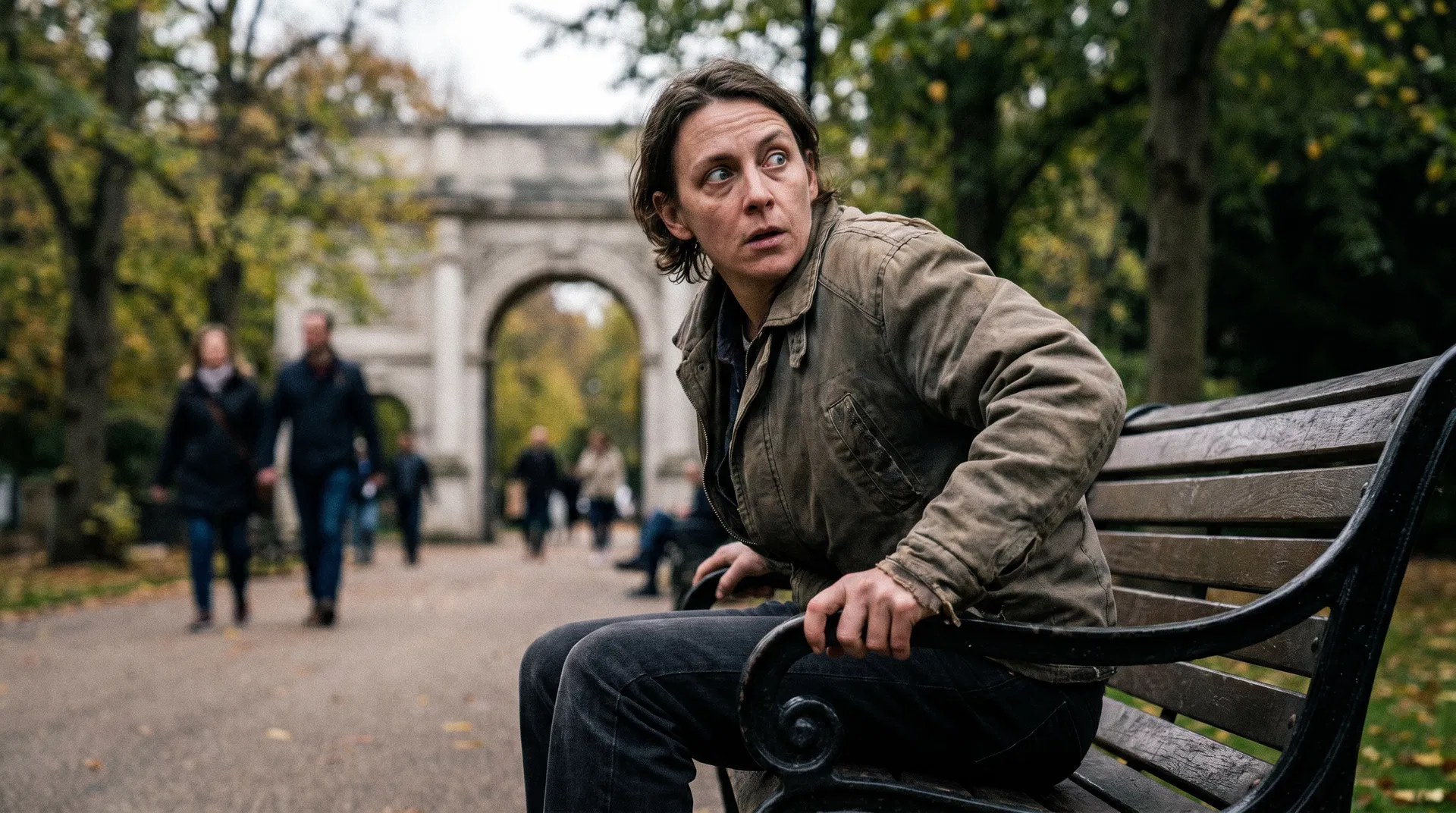

What is hypervigilance?
Hypervigilance is an increased state of alertness to possible threats. Your attention is pulled towards anything that might signal danger, and it stays there. In the short term, this is useful: after something frightening, being extra watchful helps you stay safe. The problem comes when the alert state does not switch off once the danger has passed. The word sounds dramatic, but the experience is often quiet and constant. It is the background hum of never fully relaxing, of always checking, of being exhausted by the end of an ordinary day without quite knowing why.
Symptom, or a response to real danger?
The safety behaviours that most often keep hypervigilance going are constant scanning and body bracing. Treatment starts by bringing awareness to the muscle tension: dropping the shoulders, breathing out fully, and deliberately sitting so you are not guarding the exit, to test whether the room stays safe without active defence. Before any of that, there is a careful safety check. If someone is currently living with domestic volatility or in an abusive workplace, hypervigilance is an accurate, rational response, and the priority is safety planning and boundaries rather than trauma processing.
What does hypervigilance feel like?
Common signs include: being easily startled by noises or sudden movements; scanning rooms, crowds or streets; choosing seats where you can see the door; noticing small changes in people's faces or tone and reading them as hostile; finding it hard to concentrate because part of your mind is always on watch; trouble falling or staying asleep; feeling irritable or on edge; and a tight, braced body. In relationships, hypervigilance can look like closely tracking a partner's mood, needing to know where people are, or reacting strongly to small signs of rejection. At work it can look like perfectionism or over preparing, because getting something wrong feels dangerous. Many people do not recognise these as symptoms. They describe themselves as observant, sensitive or a light sleeper, and only notice the cost when they are exhausted. Hypervigilance is tiring in a particular way. Constant scanning uses a lot of mental energy, so people often feel drained, foggy or short tempered without having done anything obviously demanding. Headaches, jaw clenching, stomach upsets and aching shoulders are common, because the body stays braced for something that never comes. Some people notice that they only relax when they are completely alone, or not even then. If you have been putting these down to a busy life, it may be worth considering whether your threat system is doing more work than it needs to.
Why does hypervigilance happen after trauma?
After a traumatic experience, the brain's threat system is trying to make sure it never happens again. Ehlers and Clark's cognitive model of post traumatic stress disorder explains why that sense of danger can persist long after the event. Two things keep it going. First, the meaning you take from the trauma, for example that the world is dangerous or that you cannot trust yourself to cope. Second, the way the memory is stored: fragmented and poorly linked to its time and place, so that reminders trigger the feeling that the danger is happening now, not in the past. The result is a sense of serious, current threat. Hypervigilance makes sense from the inside, because it feels as if the danger is still here. Strategies that seem protective, such as avoiding reminders, checking for danger and staying on guard, stop the brain from updating that belief.
Can you have hypervigilance without trauma?
Yes. Hypervigilance is not only a trauma symptom. People with anxiety problems show a well documented bias towards noticing threat. A meta analysis by Bar Haim and colleagues found that anxious people reliably direct attention towards threatening information, across many types of anxiety, while non anxious people do not. What you scan for depends on what you fear. With generalised anxiety, it might be anything that could go wrong. With social anxiety, it is often your own performance and others' reactions. With health anxiety, it is the body: every twinge, lump or skipped beat. With panic, it is internal sensations that might signal an attack. The scanning feels protective, but it finds ambiguous things to worry about, which keeps the alarm running. Hypervigilance can also build up without a single dramatic event. Growing up in an unpredictable household, years of bullying or discrimination, a demanding job where mistakes carry heavy consequences, or caring for someone who is unwell can all train the threat system to stay switched on. People in these situations often say they do not have "real" trauma. Whether or not the word fits, the pattern of constant watchfulness is real, it makes sense given what you have lived through, and it can be worked with.
Is hypervigilance a sign of PTSD?
Hypervigilance is one of the arousal symptoms of post traumatic stress disorder, alongside an exaggerated startle response, sleep problems, irritability and poor concentration. On its own, though, it does not mean you have PTSD. A diagnosis looks at a pattern that also includes re experiencing, such as intrusive memories, flashbacks or nightmares, and avoidance of reminders. Complex PTSD, which can follow prolonged or repeated trauma, often involves hypervigilance together with difficulties with emotions, self worth and relationships. Only an assessment can tell you what is going on for you. If several of these patterns are familiar, that is a good reason to talk to someone.
What if I am still not safe?
Sometimes vigilance is not an over reaction. If you are living with someone who hurts, threatens or controls you, or you are in another situation where danger is real and ongoing, staying alert is a sensible response, and therapy aimed at reducing it is not the first priority. Safety is. If you are in immediate danger, call 999. If you are experiencing domestic abuse, the National Domestic Abuse Helpline is free and open 24 hours on 0808 2000 247. If you are feeling overwhelmed or having thoughts of harming yourself, you can call NHS 111 and choose option 2 for mental health, or talk to Samaritans on 116 123. Therapy can be part of the picture when you are in a safer place, and a good therapist will always check this with you first.
Why does trying to stay safe keep hypervigilance going?
It is natural to manage hypervigilance by doing more of what feels protective: avoiding busy places, carrying things just in case, checking locks repeatedly, keeping your phone on loud, never sitting with your back to a room. These are often called safety behaviours. The problem is that when nothing bad happens, the brain credits the safety behaviour rather than the situation. The belief that danger was close and only just avoided stays intact, and so does the need to keep watching. Over time, life narrows around the watching. CBT works by gently testing this. With a therapist, you drop safety behaviours step by step and notice what actually happens, so your threat system gets new information to learn from.
What helps hypervigilance day to day?
Start by noticing it without criticising yourself: "my threat system is on high alert" is more accurate and more useful than "I'm being ridiculous". Notice what you are scanning for and what you are doing to stay safe. Regular exercise, consistent sleep times, and cutting back on caffeine and alcohol reduce the background level of arousal. Slow breathing with a long out breath can take the edge off acute alarm. Deliberately directing attention outward, to a conversation or a task, practises the opposite of scanning. These steps help, but if hypervigilance comes from trauma, they rarely resolve it on their own, because the underlying sense of current threat is still there. That is the point to get help. It can also help to let one or two people close to you know what is going on. Partners and family often misread hypervigilance as irritability, coldness or overreaction. Explaining that your threat system is stuck on high alert, and what tends to set it off, can reduce conflict and make home feel safer, which in turn lowers the background level of alarm.
Hypervigilance in practice: an anonymised example
This is an anonymised example from the clinical practice of Sanah Younis, Founder and Clinical Director. Identifying details have been changed to protect confidentiality, and each person's treatment is planned around them. A client came to us with chronic exhaustion, muscle tension and a constant sense of impending doom, despite a secure life. We mapped their physical baseline, with a rigid posture, shallow breathing and eyes always scanning the room, and linked it to a childhood spent around unpredictable family dynamics. The work focused on noticing and settling the body: lengthening the out breath, deliberately dropping the shoulders, and small experiments such as sitting with their back to a café entrance for five minutes. Over successive sessions, their nervous system updated its sense of threat, and the bracing eased.
How The Lyceum helps with hypervigilance
We start with an assessment to understand where the hypervigilance comes from: a specific traumatic event, a long period of feeling unsafe, or an anxiety pattern. We also check that you are currently safe. For trauma, NICE guidance recommends trauma focused psychological treatment, including trauma focused CBT. This works on the meaning of the trauma, on updating the memory so that it feels like the past, and on reducing the avoidance and safety behaviours that keep threat alive. For anxiety driven hypervigilance, CBT targets the attentional bias and the specific fears behind it. EMDR is also offered online by the clinic's associate therapists, where it is the right fit. Sessions are face to face in West London and Kensington, or online across the UK. If you would like to talk it through first, book a free consultation.
Clinical Observation
"In the room, hypervigilance looks like chronic physical bracing: shoulders lifted toward the ears, shallow upper chest breathing, sitting rigidly facing the door, tracking every minor sound in the hallway, and scanning the therapist's face for micro expressions of judgement or disapproval."
Sanah Younis, Founder and Clinical Director of The Lyceum Clinic and a BABCP accredited Cognitive Behavioural Therapist, The Lyceum Clinic, West London
The Lyceum Clinic
Private CBT with a BABCP accredited therapist. Enquire to discuss current options, relevant referral or funding questions, and whether this support may be suitable. Face to face in West London (Chiswick, Ealing and Richmond) and Kensington, or online across the UK. £110 online · £140 face to face.
If You Need Urgent Support
- Call 999 or go to your nearest A&E if you or someone else is in immediate danger
- Samaritans: call 116 123, free, 24/7
- Shout: text 85258, free, 24/7 crisis text support
This article is for general informational purposes and does not constitute medical, legal, or diagnostic advice. It is not a substitute for a consultation with a qualified healthcare professional. Statistics cited are drawn from publicly available research and are accurate as of the date of publication. Last clinically reviewed: November 2026 by Sanah Younis, Founder and Clinical Director of The Lyceum Clinic and a BABCP accredited Cognitive Behavioural Therapist.