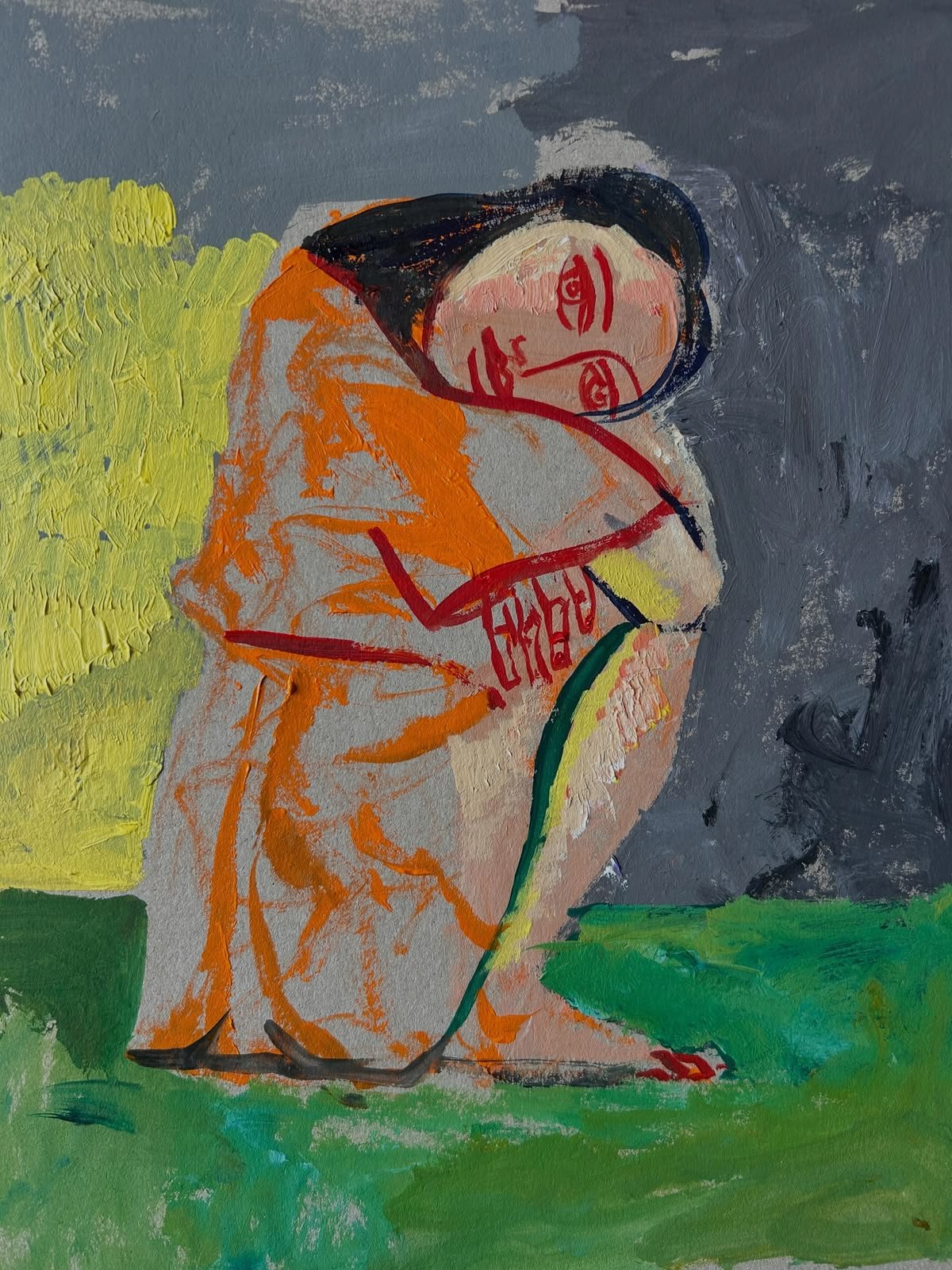

Faith and conscience, or OCD?
| Values and faith | Scrupulosity or moral OCD | |
|---|---|---|
| Feeling | Meaning, connection, peace, ordinary guilt that resolves | Fear, dread and guilt that will not settle |
| Standard | Shared with your community and tradition | Stricter than your tradition asks, applied to yourself only |
| Doubt | Questions that can be lived with | Doubt that demands an answer right now |
| Practice | Prayer or observance as devotion | Repeating, redoing or checking until it feels 'right' |
| After confession or apology | Relief that lasts | Brief relief, then more doubt |
What is moral OCD?
Moral OCD is an informal name for OCD where the obsessions centre on ethics. People describe constant doubts such as: did I lie, did I take credit I did not deserve, was I unfair, did I hurt someone's feelings, am I secretly a bad person? A small, ordinary event, like giving slightly wrong change or forgetting to reply to a message, can trigger hours of anxious analysis. The doubt is not a sign of poor character. It tends to affect people with high standards and a strong sense of responsibility, who care a great deal about being good. OCD takes that care and turns it into a demand for certainty that is impossible to meet.
Working with faith, not against it
At The Lyceum we work collaboratively, explicitly respecting a client's faith and partnering with their spiritual values rather than undermining them. Part of the work is distinguishing genuine moral conscience from OCD interference.
What is scrupulosity or religious OCD?
Scrupulosity is OCD with religious or moral obsessions. It has been described for centuries, and researchers have long noted that it often affects people who are devout and sincere. Common obsessions include fears of having sinned, of having had a blasphemous thought, of a prayer or ritual being invalid, of being impure, or of punishment from God. Research on scrupulosity has identified two broad strands of fear: fear of having committed sin, and fear of punishment from God. Scrupulosity appears across faiths, and the form it takes is shaped by the person's tradition and community. It can also affect people with no religious affiliation, where the focus becomes moral rather than religious.
What are the signs of moral OCD and scrupulosity?
Common signs include: Repeated doubts about whether you have done something wrong, often over very small matters, and difficulty accepting that it is resolved. Repeating prayers, ablutions or rituals until they feel 'just right', or worrying that a lapse in concentration has made them invalid. Frequent confession or apology, to a faith leader, partner or friend, often for the same thing more than once. Asking others whether something was a sin or was wrong, or researching rulings and opinions at length. Mental reviewing of conversations, actions or intentions, and trying to cancel out a 'bad' thought with a 'good' one. Avoiding places of worship, religious texts or certain people because they trigger unwanted thoughts. These patterns are compulsions. They bring brief relief, and then the doubt returns.
What does moral OCD look like day to day?
Moral OCD rarely announces itself. It tends to show up in ordinary moments that other people would forget within minutes. At work, it might be rewriting an email several times in case a phrase could be read as misleading, or going back to a manager to correct a tiny detail from a meeting. With money, it might be returning to a shop over a few pence, or worrying for days that you underpaid a bill. In relationships, it might be confessing a passing thought about someone else to your partner, or asking again and again whether something you said was hurtful. Other people often see only the visible part: the apologies, the corrections, the need to double check. The larger part happens inside, in hours of reviewing and weighing up whether you are a good enough person. People frequently describe feeling exhausted, and some find that the constant self scrutiny feeds low mood. If any of this feels familiar, it does not mean you are oversensitive or weak. It means a pattern has formed that responds well to the right treatment. If low mood ever turns into thoughts of harming yourself, call NHS 111 and choose option 2, contact Samaritans on 116 123, or call 999 in an emergency.
How is scrupulosity different from strong faith?
Faith and scrupulosity can look similar from the outside, but they feel very different on the inside. Faith usually brings meaning and connection, and ordinary guilt tends to resolve through the practices your tradition offers. Scrupulosity brings dread, and the relief from confession or prayer does not last. A useful sign is that people with scrupulosity often hold themselves to a stricter standard than their own tradition requires, and would not judge anyone else by it. Many find that their symptoms get in the way of their religious life, and that worship becomes a source of fear rather than comfort. Treating scrupulosity is not about weakening faith. For many people, it is about being able to practise their faith freely again.
Why is reassurance so hard to resist?
When you are tormented by a doubt about sin or wrongdoing, asking someone you trust for an answer feels responsible and right. The problem is that OCD rarely accepts the answer for long. A new 'what if' appears, the question is asked again, and over time the reassurance becomes part of the cycle. Faith leaders, partners and family often end up being asked the same questions repeatedly. In therapy, part of the work is agreeing together, sometimes with input from a trusted faith leader if you would like that, how to respond to these requests in a way that supports recovery rather than feeding the doubt.
How is moral OCD and scrupulosity treated?
NICE guidance recommends CBT including exposure and response prevention (ERP) for OCD, and that applies to scrupulosity and moral OCD too. ERP involves gradually facing the triggers OCD has made you avoid while resisting the compulsions that usually follow, such as re praying, confessing or checking. With scrupulosity, the work is designed to respect your beliefs. Clinicians who have written about treating religious clients describe agreeing exposures that are consistent with the person's values and tradition, and distinguishing between what the faith actually requires and what OCD demands. Exposures never ask you to act against your faith. They target the extra rules OCD has added. The cognitive side of CBT looks at beliefs such as inflated responsibility, the idea that thinking something is as bad as doing it, and the need for complete certainty. The aim is to tolerate the uncertainty that every person of conscience lives with.
Do I need a therapist who shares my faith?
Not necessarily. What matters most is a therapist who understands OCD well and who approaches your faith with respect and curiosity. A good therapist will want to understand your tradition from you, will not try to change your beliefs, and will be open to you consulting your own faith leader during treatment if that helps. If it would help you to feel understood, it is entirely reasonable to ask about this at a first consultation.
How The Lyceum helps with moral OCD and scrupulosity
Treatment at The Lyceum begins with an assessment to understand your doubts, your compulsions and what your faith or values mean to you. We take a faith sensitive approach, working alongside your beliefs rather than against them. From there we agree CBT plan built around ERP and the beliefs that keep the doubt going. Sessions are available face to face in West London (Chiswick, Ealing, Richmond and Acton) and Kensington, or online across the UK. The clinic is led by Sanah Younis, Founder and Clinical Director, a BABCP accredited CBT therapist. You can book a free 15 minute consultation to talk through whether this is the right fit.
Clinical Observation
"A genuinely malicious person does not spend four hours crying in a clinic room terrified that they accidentally offended someone or broke a moral rule. Your intense distress and horror at the thought of being bad is the absolute, definitive proof of your strong moral character. OCD is weaponising your very values against you."
Sanah Younis, Founder and Clinical Director of The Lyceum Clinic and a BABCP accredited Cognitive Behavioural Therapist, The Lyceum Clinic, West London
The Lyceum Clinic
Private CBT with a BABCP accredited therapist. Enquire to discuss current options, relevant referral or funding questions, and whether this support may be suitable. Face to face in West London (Chiswick, Ealing and Richmond) and Kensington, or online across the UK. £110 online · £140 face to face.
If You Need Urgent Support
- Call 999 or go to your nearest A&E if you or someone else is in immediate danger
- Samaritans: call 116 123, free, 24/7
- Shout: text 85258, free, 24/7 crisis text support
This article is for general informational purposes and does not constitute medical, legal, or diagnostic advice. It is not a substitute for a consultation with a qualified healthcare professional. Statistics cited are drawn from publicly available research and are accurate as of the date of publication. Last clinically reviewed: November 2026 by Sanah Younis, Founder and Clinical Director of The Lyceum Clinic and a BABCP accredited Cognitive Behavioural Therapist.